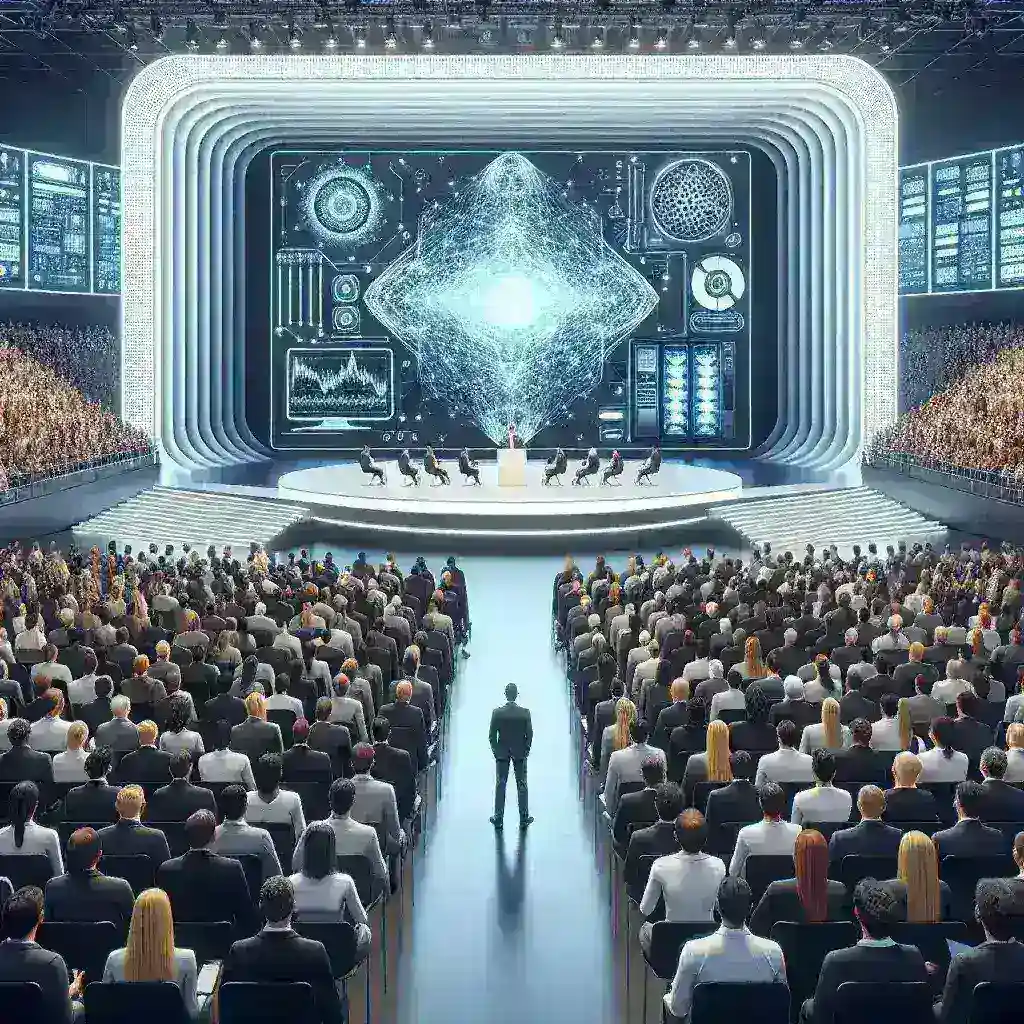
Dell Technologies World Conference Showcases Revolutionary AI Infrastructure Solutions
The annual Dell Technologies World Conference has once again proven to be the epicenter of technological innovation, with this year’s event placing a spotlight on groundbreaking developments in AI infrastructure. Industry leaders, technology enthusiasts, and enterprise decision-makers gathered to witness firsthand how Dell is positioning itself at the forefront of the artificial intelligence revolution. The conference unveiled a comprehensive suite of solutions designed to address the complex challenges organizations face when implementing and scaling AI technologies.
As businesses worldwide race to harness the transformative power of artificial intelligence, the demand for robust, scalable, and efficient AI infrastructure has never been greater. Dell Technologies has responded to this need with an impressive array of hardware, software, and service offerings that promise to democratize AI access while delivering enterprise-grade performance and reliability.
The Evolution of Dell’s AI Strategy
Dell Technologies has been on a remarkable journey in the AI landscape. What began as targeted solutions for specific use cases has evolved into a comprehensive ecosystem approach that addresses every layer of the AI infrastructure stack. This evolution reflects Dell’s deep understanding of the market’s needs and its commitment to innovation.
Michael Dell, Chairman and CEO of Dell Technologies, emphasized this commitment during his keynote address: “AI represents the most significant technological shift of our generation. Our mission is to make AI infrastructure accessible, manageable, and scalable for organizations of all sizes, enabling them to unlock the tremendous value that these technologies can deliver.”
This vision is particularly relevant as AI adoption continues to accelerate across industries. According to research highlighted at the conference, over 75% of enterprises now consider AI a strategic priority, yet many struggle with the complexities of implementation, particularly around infrastructure requirements.
PowerEdge XE9680: The AI Powerhouse
One of the most significant announcements at the conference was the unveiling of the PowerEdge XE9680 server, Dell’s most powerful AI-optimized system to date. This high-performance computing platform has been specifically engineered to handle the most demanding AI workloads, from model training to inference at scale.
The PowerEdge XE9680 features:
- Support for up to 8 NVIDIA H100 Tensor Core GPUs or AMD Instinct MI300 accelerators
- Next-generation CPU architecture with enhanced AI acceleration capabilities
- Innovative liquid cooling technology to manage thermal output efficiently
- Memory bandwidth optimizations specifically designed for large language models
- Advanced fabric interconnects for near-zero latency in multi-node deployments
During a live demonstration, Dell engineers showcased the XE9680’s ability to train a complex language model 40% faster than previous generation systems while consuming 25% less energy. This performance-to-efficiency ratio represents a significant advancement in addressing one of AI’s most pressing challenges: the environmental impact of high-performance computing.
Project Horizon: Dell’s Vision for AI-Ready Infrastructure
Perhaps the most forward-looking announcement at the conference was the introduction of Project Horizon, Dell’s comprehensive framework for AI-ready infrastructure. This initiative aims to simplify the complex process of building, deploying, and managing AI environments by providing pre-validated architectures, reference designs, and deployment blueprints.
Project Horizon encompasses several key components:
- AI Infrastructure Assessment Tool: A diagnostic utility that evaluates existing infrastructure and provides recommendations for AI readiness
- Reference Architectures: Pre-validated configurations optimized for specific AI workloads and frameworks
- Deployment Automation: Tools that streamline the implementation process, reducing time-to-value
- Lifecycle Management: Continuous optimization capabilities that ensure AI infrastructure evolves with changing requirements
“Project Horizon represents our commitment to removing the barriers to AI adoption,” explained Jeff Clarke, Vice Chairman and Co-COO of Dell Technologies. “By providing a clear roadmap and the necessary tools, we’re enabling organizations to focus on the outcomes they want to achieve with AI rather than getting bogged down in infrastructure complexities.”
Storage Innovations for AI Workloads
AI workloads place unique demands on storage systems, requiring both massive capacity and exceptional performance. Dell Technologies addressed this challenge with several significant announcements related to its storage portfolio.
PowerScale for AI: Scaling to Meet Unstructured Data Demands
The exponential growth of unstructured data is a critical challenge for organizations implementing AI initiatives. Dell’s enhanced PowerScale storage system addresses this challenge head-on with capabilities specifically designed for AI workloads:
- Enhanced throughput optimizations for parallel data access patterns common in AI training
- Native integration with popular AI frameworks including TensorFlow, PyTorch, and NVIDIA AI Enterprise
- Intelligent data tiering that automatically places data on the most appropriate storage medium based on access patterns
- Advanced data reduction technologies that maximize effective capacity without compromising performance
A particularly impressive demonstration showed PowerScale delivering sustained throughput of over 200GB/s in a multi-node configuration, enabling simultaneous training of multiple large language models without the performance degradation typically associated with shared storage environments.
Project DataSphere: The Future of AI-Optimized Storage
Looking further ahead, Dell provided a glimpse into Project DataSphere, a next-generation storage architecture specifically designed for AI workloads. While still in development, the project promises to deliver:
- Storage-compute co-design principles that minimize data movement
- In-storage computing capabilities that enable preliminary data preprocessing before reaching compute resources
- Adaptive caching algorithms that learn from AI workload patterns and optimize data placement accordingly
- Multi-modal data management for handling diverse AI data types from text to images to time-series information
“Data is the fuel that powers AI, and having the right storage infrastructure is absolutely critical,” noted Varun Chhabra, Senior Vice President of Storage Marketing at Dell Technologies. “With Project DataSphere, we’re reimagining storage for the AI era, creating systems that don’t just store data but actively participate in the AI workflow.”
Networking: The Often Overlooked Component of AI Infrastructure
While compute and storage often dominate the AI infrastructure conversation, Dell Technologies made a compelling case for the critical role of networking in successful AI deployments. The conference featured several announcements related to Dell’s networking portfolio:
PowerSwitch AI Series: Purpose-Built for AI Traffic Patterns
The new PowerSwitch AI Series represents Dell’s most comprehensive networking solution for AI environments. These switches have been engineered from the ground up to handle the unique traffic patterns associated with distributed AI workloads:
- Ultra-low latency performance critical for multi-node AI training
- Congestion-aware routing algorithms that dynamically adjust to AI workload patterns
- Enhanced buffer architectures designed to handle the bursty nature of AI traffic
- Support for RDMA over Converged Ethernet (RoCE) to minimize CPU overhead
- Integration with Dell’s AIOps framework for automated optimization and troubleshooting
During a technical session, Dell engineers demonstrated how the PowerSwitch AI Series could maintain consistent performance even when subjected to the complex communication patterns typical of distributed training workloads, where traditional switches often experience significant performance degradation.
Fabric Vision: Holistic Network Management for AI
Complementing the hardware announcements, Dell also introduced Fabric Vision, a comprehensive management solution for AI networking environments. This software platform provides:
- Real-time visibility into traffic patterns specific to AI workloads
- Predictive analytics that identify potential bottlenecks before they impact performance
- Automated optimization recommendations based on observed traffic patterns
- Integration with popular orchestration platforms including Kubernetes
“Networking is often the silent bottleneck in AI infrastructure,” explained Tom Burns, Senior Vice President of Integrated Products and Solutions at Dell Technologies. “With our AI-optimized networking solutions, we’re ensuring that data can flow freely between compute and storage resources, enabling AI workloads to achieve their full potential.”
Software and Services: The Glue That Binds AI Infrastructure
Hardware alone cannot address the complexities of AI implementation. Recognizing this, Dell Technologies unveiled a comprehensive suite of software and services designed to simplify the AI journey.
Dell AI Factory: Accelerating Time-to-Value
The Dell AI Factory represents a significant step toward democratizing AI implementation. This integrated solution combines hardware, software, and services into a cohesive offering that accelerates time-to-value for AI initiatives:
- Pre-validated Configurations: Hardware and software stacks optimized for specific AI use cases
- Integrated AI Software Stack: Pre-installed and configured AI frameworks, libraries, and tools
- Deployment Services: Expert assistance with implementation and integration
- AI Training and Enablement: Knowledge transfer to internal teams to ensure long-term success
During a customer panel, several early adopters of the Dell AI Factory shared their experiences, with one healthcare organization reporting that they were able to deploy their first AI application in just three weeks, compared to the six months they had initially budgeted for the project.
Dell AI Advisory Services: Navigating the AI Journey
Recognizing that many organizations are still in the early stages of their AI journey, Dell also announced the expansion of its AI Advisory Services. This consulting offering helps organizations:
- Define their AI strategy and identify high-value use cases
- Assess their current infrastructure and identify gaps
- Develop a roadmap for AI implementation
- Create governance frameworks for responsible AI use
- Build internal capabilities through training and knowledge transfer
“Technology is only part of the AI equation,” noted Jen Felch, Chief Digital Officer and CIO at Dell Technologies. “Our AI Advisory Services help organizations navigate the organizational and process changes that are essential for successful AI adoption. It’s about transforming not just technology but the way businesses operate.”
Partnerships and Ecosystem: Extending Dell’s AI Reach
Dell Technologies has long recognized the importance of a robust partner ecosystem, and this philosophy was evident in several key partnership announcements at the conference.
NVIDIA Collaboration: Pushing the Boundaries of AI Infrastructure
Dell’s longstanding partnership with NVIDIA reached new heights with the announcement of several joint initiatives:
- Expanded validation of NVIDIA AI Enterprise software on Dell infrastructure
- Joint reference architectures for generative AI implementations
- Integrated solutions for edge AI deployments combining Dell edge computing platforms with NVIDIA GPUs
- Collaborative research on next-generation AI infrastructure optimizations
Jensen Huang, CEO of NVIDIA, joined Michael Dell on stage to discuss the companies’ shared vision for AI infrastructure: “The combination of NVIDIA’s AI software and accelerated computing with Dell’s enterprise infrastructure expertise creates a powerful foundation for organizations looking to transform their operations with AI.”
Expanding the AI-Ready Ecosystem
Beyond NVIDIA, Dell announced expanded partnerships with several key players in the AI ecosystem:
- Red Hat: Enhanced integration between Dell infrastructure and Red Hat OpenShift AI for containerized AI workloads
- Intel: Optimizations for Intel’s AI accelerators across Dell’s server portfolio
- VMware: Simplified AI deployment in virtualized environments through integrated solutions
- Starburst: Data fabric integration for seamless access to distributed data sources
“No single vendor can address all aspects of AI infrastructure,” explained Allison Dew, Chief Marketing Officer at Dell Technologies. “Through our partner ecosystem, we’re ensuring that our customers have access to best-of-breed solutions across the entire AI stack, with the assurance that these solutions work seamlessly with Dell infrastructure.”
Customer Success Stories: AI Infrastructure in Action
Throughout the conference, Dell showcased several compelling customer success stories that illustrated the real-world impact of its AI infrastructure solutions.
Healthcare: Transforming Patient Care
A leading healthcare system shared how they leveraged Dell’s AI infrastructure to develop and deploy an AI-powered diagnostic tool that analyzes medical images to detect early signs of disease. Key outcomes included:
- 40% reduction in diagnostic time for certain conditions
- 22% improvement in diagnostic accuracy compared to traditional methods
- Ability to scale the solution across their entire hospital network due to Dell’s distributed AI architecture
“The combination of Dell’s high-performance computing infrastructure and their healthcare-specific expertise was instrumental in our success,” noted the organization’s CIO. “We were able to move from concept to production in a fraction of the time we expected, with better results than we had anticipated.”
Manufacturing: AI-Driven Quality Control
A global manufacturing organization described how they implemented an edge-to-core AI solution using Dell Technologies infrastructure to revolutionize their quality control processes:
- Edge computing devices with AI capabilities deployed directly on production lines
- Real-time analysis of product quality using computer vision
- Centralized model training and management using Dell’s data center infrastructure
- 30% reduction in defect rates within six months of implementation
“What impressed us most was the seamless integration between the edge and core components of our AI infrastructure,” explained the company’s VP of Operations. “Dell’s unified approach allowed us to manage our entire AI environment as a cohesive system, despite its distributed nature.”
The Future of AI Infrastructure: Dell’s Roadmap
The conference concluded with a forward-looking session that provided insights into Dell’s vision for the future of AI infrastructure.
Sustainable AI: Addressing the Environmental Impact
Recognizing the significant energy requirements of AI workloads, Dell outlined several initiatives aimed at improving the sustainability of AI infrastructure:
- Next-generation cooling technologies that dramatically reduce energy consumption
- AI-optimized power management that dynamically adjusts resource allocation based on workload requirements
- Infrastructure efficiency metrics specifically designed for AI workloads
- Circular economy approaches to AI hardware lifecycle management
“As AI becomes more pervasive, its environmental impact will become increasingly significant,” noted Page Motes, Head of Corporate Sustainability at Dell Technologies. “We’re committed to ensuring that our AI infrastructure solutions deliver not just exceptional performance but do so in the most environmentally responsible manner possible.”
Democratizing AI: Making Advanced Capabilities Accessible
A recurring theme throughout the conference was Dell’s commitment to democratizing access to AI capabilities. Several initiatives were outlined that aim to make advanced AI infrastructure more accessible:
- AI-as-a-Service offerings that reduce the upfront investment required for AI implementation
- Simplified deployment models that reduce the specialized expertise needed to implement AI infrastructure
- Modular approaches that allow organizations to start small and scale as their AI initiatives mature
- Educational resources and community support to build AI infrastructure expertise
“AI has the potential to transform every industry, but only if it’s accessible to organizations of all sizes,” emphasized Varun Chhabra. “Our goal is to remove the barriers to entry, making enterprise-grade AI infrastructure available to any organization with the vision to leverage these technologies.”
Key Takeaways for Organizations Building AI Infrastructure
The Dell Technologies World Conference provided valuable insights for organizations at any stage of their AI journey. Key takeaways include:
Holistic Approach is Essential
Successful AI implementation requires a holistic approach that addresses compute, storage, networking, and software as an integrated system. Dell’s comprehensive portfolio is designed to provide this end-to-end solution, eliminating the integration challenges that often plague AI initiatives.
Scalability from Day One
AI projects have a tendency to grow rapidly once initial value is demonstrated. Infrastructure decisions should prioritize scalability from the outset, even for pilot projects. Dell’s modular approach to AI infrastructure allows organizations to start with appropriate resources and scale seamlessly as requirements evolve.
Data Strategy Underpins AI Success
The quality, accessibility, and governance of data are critical factors in AI success. Dell’s integrated approach to data management ensures that organizations can build a solid foundation for their AI initiatives by addressing data challenges proactively.
Skills and Expertise Matter
Technology alone cannot deliver AI success. Organizations must invest in building the necessary skills and expertise, either internally or through partnerships. Dell’s comprehensive services and educational resources provide valuable support in this critical area.
Conclusion: Dell’s Vision for an AI-Powered Future
The Dell Technologies World Conference provided compelling evidence of Dell’s commitment to leading the AI infrastructure revolution. Through innovative hardware, comprehensive software solutions, expert services, and strategic partnerships, Dell is positioning itself as the partner of choice for organizations looking to harness the transformative power of artificial intelligence.
As Michael Dell stated in his closing remarks: “AI represents both our greatest challenge and our greatest opportunity. By providing the infrastructure foundation that makes AI accessible, manageable, and sustainable, we’re empowering organizations to solve previously intractable problems, create new sources of value, and transform the way they serve their customers and communities.”
For organizations navigating the complex landscape of AI implementation, Dell’s comprehensive approach offers a clear path forward—one that addresses not just the technical requirements but the organizational, process, and skills considerations that are equally critical to success. As AI continues its journey from emerging technology to mainstream business tool, Dell Technologies appears well-positioned to lead this transformation.
The innovations showcased at Dell Technologies World underscore a fundamental shift in the company’s strategy—from being a provider of infrastructure components to delivering integrated solutions that address the full spectrum of AI requirements. This evolution reflects Dell’s deep understanding of the market’s needs and its commitment to removing the barriers that have historically limited AI adoption.
As organizations continue their AI journeys, the infrastructure foundation they build today will determine their ability to capitalize on the opportunities that lie ahead. With its comprehensive portfolio, commitment to innovation, and customer-centric approach, Dell Technologies is providing the solid foundation that enterprises need to build their AI-powered future.






Leave a Reply